Can I make an observation? Doing what you love - "following your bliss" - is a totally insane, preposterous and irrational thing to do. It will make you broke and anxious and periodically suicidally depressed. It will ravage your heart and mind with obsessions and compulsions, until you can't sit down to a polite conversation without gabbing manically about your most recent harebrained pursuit. It will slowly strip you of all social graces, as well as any unrelated interests or concerns you may once have maintained. You will forget to feed yourself, change your clothes, and take out the trash. In effect, you will be transformed into a bumbling, obsessive-compulsive, dirty, penniless maniac, with no regard for society and little contact with reality.
Unfortunately, it is absolutely the only way to live a satisfying life.
I just spent two weeks in Atlanta, making my record. We tracked twelve songs in three days, recording drums, bass, guitars and most of the lead vocals live. We spent another ten days arranging and recording overdubs (backup vocals, guitars, percussion, etcetera). Oliver Wood was with me, sharing in the alternating anguish and euphoria, from the first arrangement ideas to the last tambourine. Oliver is a special kind of saint; the kind that tells dirty jokes and plays the guitar like a mofo.
On the day I turned 26, I left Atlanta and drove south to New Orleans, for a week of high octane mojo-renewal. I had my rough mixes in tow.
To tell you the truth, this project has been absolutely grueling. I've been crazed and harried since mid-May, waking up in the middle of the night to make notes about drum fills, or record background vocal ideas on my iPhone. During the recording, I'm pretty sure I felt the complete range of human emotion in the course of each day. The release date has been moved to January (following the advice of a radio promotion firm), which means I've got another five months of the same to look forward to.
To tell you the truth again, I believe these are the best songs I've ever written, many of the best players I've ever worked with, and the best singing I've ever gotten on tape. This record is going to be outstanding, and I am fiercely proud of it.
I told you all in my previous post about my plan for the making and release of this record. It's a three-phase process (recording, promotion, and manufacturing). Phase one is now just about complete, and phase two (in which I'll be hiring a big-shot publicity firm and a radio promoter) starts in September.
I mentioned before that folks interested in investing should contact me. To my surprise and delight, I've raised over $20,000 to date in investments from fans. If anyone else is interested in investing in the project, I am open to taking another $10,000 in investments (to be repaid, with interest, over an agreed-upon period after the record is released). Email me (carsie@carsieblanton.com) for details.
If you'd like to contribute in smaller increments, I'm still taking donations as well. Small donations will help A TON by covering unplanned and unpredictable budget items (of which there are always lots).
Thank you, again, for making me crazy.

Songwriter Carsie Blanton blogs about flotsam, jetsam, flim and flam.
Monday, August 1, 2011

Sunday, June 12, 2011
the big exciting news
Well, it's happened again. I've written a complete batch of shiny new songs, and I'm ready to make an album. I am more excited than a puppy in peanut-butter, and the prospect of making said album has got me obsessing over my work, my career, the industry, and the future of songs and albums. The schemes are commencing, and I'd like to share them with you.
The Album
In July, Joe and I will head to Atlanta for a week to make a record. It will be produced by the brilliant, talented, heart-squishingly soulful Oliver Wood. Oliver is one half of the Wood Brothers, a band who you may have seen me touring with/raving about on and off for just under three years. In addition to being my favorite living band, these guys have been my friends and advocates, and I feel completely humbled and honored to work with Oliver.
The record is slated to come out in October. As far as I can tell, it will be called 'Idiot Heart'.
The Release
One question that's been on my mind a bunch lately (as I've mentioned in the past) is this: what does a record label do? What did record labels do in their heyday? What do labels do that I can't?
The answer to that last one, I've decided, is this: very little, possibly nothing.
Thus, I will be releasing my next record with a bigger, bolder, more assertive approach. I will more or less be acting like a record label. I am investing my own money, and that of a few people who are inspired by the project, in not only making the best album I possibly can, but hiring a team of people to help me release it (the same sort of team a label would have in-house). There will be professional marketing, publicity, and radio campaign firms, merchandise, and music videos.
This is not cheap, and is thus not a common approach for an artist like myself. However, I am blessed to have people around to me who believe in the project and have a little cash on hand. After five years of working as an independent artist, my business generates a semi-predictable and growing income, and a few folks have taken notice and are willing to invest in the prospect that it will continue to do so. (If you are interested in being an investor, as opposed to a donor, send me an email.)
In short, I've decided that a little thing like money should not dictate the quality or the impact of my work, and I've made it my mission to act on that decision.
The Wacky Part
Speaking of money not dictating the impact of art, I've come to one more unusual conclusion in all of my scheming. I no longer want to sell my music like a commodity. Music is an activity and an experience; it is not a product, and thus, it's impossible to quantify its value. From here on out, my method of selling my music will reflect that. I am hereby transitioning my music sales from the traditional model to the pay-what-you-want model.
Many of you have seen the "Quidplayer" on my website, which allows you to download my music for any price you want. A few months ago, some friends (Mark Erelli and Red Molly) inspired me to try this approach with my physical CD at live shows. I have done so, and it's gone remarkably well.
This model is really inspiring to me, and here's the best way I can explain it: Songwriting and performing is not just my job. It's my life, my passion, and the work I was born to do. If I am being honest with myself, it doesn't matter to me how much money I make doing it. If I was literally starving, I might get a job, but I will never stop making music. My music is a gift to me from somewhere else, and I give it as a gift to anyone who is moved by it.
All of that to say this: whether you pay $5 or $500 for my CD is none of my concern. That is your decision, and whatever choice you make, I want you to have it. Music is made to be shared. A song is not worth $.99 any more than it's worth $99; it is either completely worthless (if it doesn't move you), or infinitely valuable (if it does). Who am I to decide what you should pay for it?
Therefore, I will be releasing 'Idiot Heart' under the pay-what-you-want model. The digital album will be made available on Quidplayer, and the hard copies will be made available at live shows and through my website in a way that allows you to set your own price. Additionally, I will be asking you to share it with anyone who might be moved by it. The more people hear it, the better it is serving its purpose.
All of the above applies to my three previous releases, as well. Go forth and burn them! If you feel so moved, send me some money via Quidplayer, or better yet, buy some tickets and come to a show.
The Take-Home
The shortest possible version of all this is as follows: I have twelve new songs, and a really exciting team of musicians to help me execute them. I am as committed to these songs as I could possibly be. I am putting my money where my mouth is (and any other money I come across for the next four months), and doing everything within my power to make a great record, and to help it reach a larger audience.
Part of what's within my power is this: I am giving it, as a gift, to anyone who wants it. If my audience feels so moved, they are free to return the favor by throwing some money my way.
In case you want to contribute to this project, the "ChipIn" widget below will be up on my various and sundry websites until the project is complete (October). Any time you feel moved, toss some cash in the proverbial bucket. Rest assured knowing that it will go directly towards making and promoting my next record, with the help of a way-more-experienced-than-me recording & promotion team.
Thank you for giving me the means to spend my every waking hour thinking, dreaming, obsessing, scheming, and feeling about music. I couldn't be more blessed.
The Album
In July, Joe and I will head to Atlanta for a week to make a record. It will be produced by the brilliant, talented, heart-squishingly soulful Oliver Wood. Oliver is one half of the Wood Brothers, a band who you may have seen me touring with/raving about on and off for just under three years. In addition to being my favorite living band, these guys have been my friends and advocates, and I feel completely humbled and honored to work with Oliver.
The record is slated to come out in October. As far as I can tell, it will be called 'Idiot Heart'.
The Release
One question that's been on my mind a bunch lately (as I've mentioned in the past) is this: what does a record label do? What did record labels do in their heyday? What do labels do that I can't?
The answer to that last one, I've decided, is this: very little, possibly nothing.
Thus, I will be releasing my next record with a bigger, bolder, more assertive approach. I will more or less be acting like a record label. I am investing my own money, and that of a few people who are inspired by the project, in not only making the best album I possibly can, but hiring a team of people to help me release it (the same sort of team a label would have in-house). There will be professional marketing, publicity, and radio campaign firms, merchandise, and music videos.
This is not cheap, and is thus not a common approach for an artist like myself. However, I am blessed to have people around to me who believe in the project and have a little cash on hand. After five years of working as an independent artist, my business generates a semi-predictable and growing income, and a few folks have taken notice and are willing to invest in the prospect that it will continue to do so. (If you are interested in being an investor, as opposed to a donor, send me an email.)
In short, I've decided that a little thing like money should not dictate the quality or the impact of my work, and I've made it my mission to act on that decision.
The Wacky Part
Speaking of money not dictating the impact of art, I've come to one more unusual conclusion in all of my scheming. I no longer want to sell my music like a commodity. Music is an activity and an experience; it is not a product, and thus, it's impossible to quantify its value. From here on out, my method of selling my music will reflect that. I am hereby transitioning my music sales from the traditional model to the pay-what-you-want model.
Many of you have seen the "Quidplayer" on my website, which allows you to download my music for any price you want. A few months ago, some friends (Mark Erelli and Red Molly) inspired me to try this approach with my physical CD at live shows. I have done so, and it's gone remarkably well.
This model is really inspiring to me, and here's the best way I can explain it: Songwriting and performing is not just my job. It's my life, my passion, and the work I was born to do. If I am being honest with myself, it doesn't matter to me how much money I make doing it. If I was literally starving, I might get a job, but I will never stop making music. My music is a gift to me from somewhere else, and I give it as a gift to anyone who is moved by it.
All of that to say this: whether you pay $5 or $500 for my CD is none of my concern. That is your decision, and whatever choice you make, I want you to have it. Music is made to be shared. A song is not worth $.99 any more than it's worth $99; it is either completely worthless (if it doesn't move you), or infinitely valuable (if it does). Who am I to decide what you should pay for it?
Therefore, I will be releasing 'Idiot Heart' under the pay-what-you-want model. The digital album will be made available on Quidplayer, and the hard copies will be made available at live shows and through my website in a way that allows you to set your own price. Additionally, I will be asking you to share it with anyone who might be moved by it. The more people hear it, the better it is serving its purpose.
All of the above applies to my three previous releases, as well. Go forth and burn them! If you feel so moved, send me some money via Quidplayer, or better yet, buy some tickets and come to a show.
The Take-Home
The shortest possible version of all this is as follows: I have twelve new songs, and a really exciting team of musicians to help me execute them. I am as committed to these songs as I could possibly be. I am putting my money where my mouth is (and any other money I come across for the next four months), and doing everything within my power to make a great record, and to help it reach a larger audience.
Part of what's within my power is this: I am giving it, as a gift, to anyone who wants it. If my audience feels so moved, they are free to return the favor by throwing some money my way.
In case you want to contribute to this project, the "ChipIn" widget below will be up on my various and sundry websites until the project is complete (October). Any time you feel moved, toss some cash in the proverbial bucket. Rest assured knowing that it will go directly towards making and promoting my next record, with the help of a way-more-experienced-than-me recording & promotion team.
Thank you for giving me the means to spend my every waking hour thinking, dreaming, obsessing, scheming, and feeling about music. I couldn't be more blessed.
Friday, May 13, 2011
the lazy mississippi, a hurryin to spring
I just spent an afternoon on the levee in the Holy Cross neighborhood of New Orleans, watching the brown Mississippi lap the tops of willow trees, which grow on what were sandy banks just last week, and are now the bottom of a river. I was with my good friend Cassidy, who skipped rocks and told me about string theory and the names of clouds. I saw Canadian Geese zooming along the surface at unprecedented speeds, a heron gliding for a length of time that defied physics, and a rickety-looking steamboat called the Creole Queen. I left feeling absolutely elated.
The magic of the city of New Orleans is that death sits quietly along it, just beyond the levee, like a stone in your back pocket. The only thing to do about it is to live, deeply and viscerally and excruciatingly. Any time something less important tries to grab your attention, the river rises and reminds you: life is here and fleeting, it's made of dirty music and tugging sorrow and wet, honeysuckle-scented breezes, and if you don't catch it exactly NOW, it is likely to be too late.
The magic of the city of New Orleans is that death sits quietly along it, just beyond the levee, like a stone in your back pocket. The only thing to do about it is to live, deeply and viscerally and excruciatingly. Any time something less important tries to grab your attention, the river rises and reminds you: life is here and fleeting, it's made of dirty music and tugging sorrow and wet, honeysuckle-scented breezes, and if you don't catch it exactly NOW, it is likely to be too late.
Tuesday, May 10, 2011
like a summer with a thousand Julys
Louis Armstrong and Oscar Peterson - "You Go to My Head" - October 1957
Tuesday, April 19, 2011
playing pointlessly
My favorite favorite book, if I had to pick one, is called "Finite and Infinite Games". In the opening pages, the author James P. Carse puts forth the notion that there are two types of games, and that everything we do in life can be identified as a "play" in one of these two categories.
The first type of game is called a finite game. A finite game is defined as any game which is played for the purpose of winning. Things that we usually call "games", such as Yahtzee and WWF wrestling, are in this category, along with things that we don't usually call games, but which are indeed played to win (at least, most of the time), such as war, college scholarships, and politics.
The second type of game is called an infinite game. An infinite game is a game that's played for the purpose of continuing the play. If someone starts to "lose" an infinite game, the other players will conspire to keep him in the game, either by helping him somehow, or by changing the rules.
The concept of changing the rules is what makes this idea really interesting to me. In a finite game, the rules are static, because rules are what determines who wins. If you change the rules, it becomes unclear who the winner is, and thus it's no longer a finite game (imagine you're playing Monopoly, and one of the other players declares a new rule: that he can take money directly from the bank whenever he wants. If this guy "wins", has he actually won?). In an infinite game, you make up the rules as you go along, and you change them whenever they become inconvenient. If the point is just to play, and not to win, then rules are only worthwhile as long as they make the game better, longer, or more fun.
Music is an infinite game. Although some people are fond of the misconception that music has "rules", such as time signatures and keys, even a limited investigation of the scope and history of music will reveal the shortcomings of this theory (free CD to anyone who can tell me the time signature of this Angola Prison Spiritual). Music theory is a way to describe music, and a language with which to communicate about it. Like any language, it's imperfect, and creates some distinctions which are lousy with exceptions.
I will say that a given song starts with a set of rules, but that those rules can be changed by the composer or the players whenever they agree to change them. Modulation is an easy example of this - if "play in the key of G" is a rule for a given song, the players or composer may choose to change that rule in order to make the song better. Dig the intro to my favorite version of "Honeysuckle Rose" if you have any doubts.
We human beings have a nasty habit of trying to turn infinite games into finite ones. Just think about the Guinness Book of World Records. Building giant replicas of things was definitely not a contest before that. The ugly business of trying to turn music into a finite game started longer ago that I can possibly determine, and is still going strong, with contests like the Grammys and American Idol leading the whole ridiculous pack.
I'm only saying all this to remind myself, and anyone else who's guilty of the same habit, that music is an infinite game. There are no rules, there are no winners, and we play it for only one purpose: to play.
The first type of game is called a finite game. A finite game is defined as any game which is played for the purpose of winning. Things that we usually call "games", such as Yahtzee and WWF wrestling, are in this category, along with things that we don't usually call games, but which are indeed played to win (at least, most of the time), such as war, college scholarships, and politics.
The second type of game is called an infinite game. An infinite game is a game that's played for the purpose of continuing the play. If someone starts to "lose" an infinite game, the other players will conspire to keep him in the game, either by helping him somehow, or by changing the rules.
The concept of changing the rules is what makes this idea really interesting to me. In a finite game, the rules are static, because rules are what determines who wins. If you change the rules, it becomes unclear who the winner is, and thus it's no longer a finite game (imagine you're playing Monopoly, and one of the other players declares a new rule: that he can take money directly from the bank whenever he wants. If this guy "wins", has he actually won?). In an infinite game, you make up the rules as you go along, and you change them whenever they become inconvenient. If the point is just to play, and not to win, then rules are only worthwhile as long as they make the game better, longer, or more fun.
Music is an infinite game. Although some people are fond of the misconception that music has "rules", such as time signatures and keys, even a limited investigation of the scope and history of music will reveal the shortcomings of this theory (free CD to anyone who can tell me the time signature of this Angola Prison Spiritual). Music theory is a way to describe music, and a language with which to communicate about it. Like any language, it's imperfect, and creates some distinctions which are lousy with exceptions.
I will say that a given song starts with a set of rules, but that those rules can be changed by the composer or the players whenever they agree to change them. Modulation is an easy example of this - if "play in the key of G" is a rule for a given song, the players or composer may choose to change that rule in order to make the song better. Dig the intro to my favorite version of "Honeysuckle Rose" if you have any doubts.
We human beings have a nasty habit of trying to turn infinite games into finite ones. Just think about the Guinness Book of World Records. Building giant replicas of things was definitely not a contest before that. The ugly business of trying to turn music into a finite game started longer ago that I can possibly determine, and is still going strong, with contests like the Grammys and American Idol leading the whole ridiculous pack.
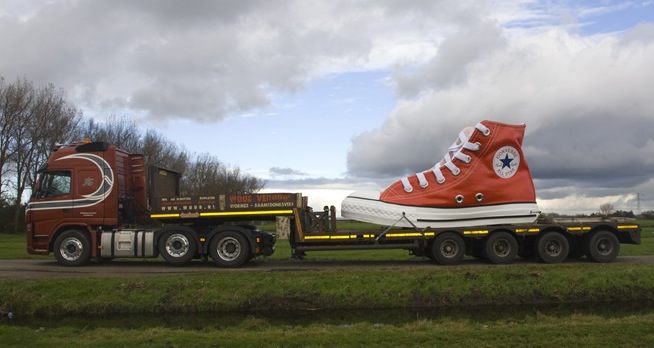
I'm only saying all this to remind myself, and anyone else who's guilty of the same habit, that music is an infinite game. There are no rules, there are no winners, and we play it for only one purpose: to play.
Thursday, April 14, 2011
today totally makes up for yesterday
This was playing in my head all day, as I walked in the sunshine with the dogs and the kids and blossomy trees and the "water ice" sellers. It's my very favorite version of one of my very favorite songs.


Friday, April 8, 2011
two great jazz songs you never heard
I've come across a couple rare gems of classic songwriting in the last few days, and wanted to share them.
Give a Broken Heart a Break
Cleo Brown is one of my most-favorite least-known artists. I don't know for sure who wrote it, but I've never found another version of it, which makes me guess it might've been Cleo herself. It's an adorable little jelly bean of a song.
You Don't Know What Love Is
I wasn't familiar with this song until I stumbled across it the other week, on a Billie Holiday cassette ($.50 from Amoeba records in LA)! Oddly enough, Ella sings this ballad harder, sadder and gutsier than Billie.
Give a Broken Heart a Break
Cleo Brown is one of my most-favorite least-known artists. I don't know for sure who wrote it, but I've never found another version of it, which makes me guess it might've been Cleo herself. It's an adorable little jelly bean of a song.
You Don't Know What Love Is
I wasn't familiar with this song until I stumbled across it the other week, on a Billie Holiday cassette ($.50 from Amoeba records in LA)! Oddly enough, Ella sings this ballad harder, sadder and gutsier than Billie.
Subscribe to:
Posts (Atom)